
How much is a tesla: Charging Costs Explained
A new Tesla Model 3 starts around $40,000, but the per-mile cost is where the real story lives. At home, you’ll pay roughly $7–10 for a full charge (60–75 kWh battery at the U.S. average $0.12/kWh), which works out to about $0.03 per mile. That’s similar to a gas car getting 55–60 mpg at $3.50/gallon. But there’s a failure mode that can quietly add a $5,000–12,000 battery replacement to your tab if you don’t spot it early. Here’s how to keep your charging costs predictable—and avoid that surprise bill.
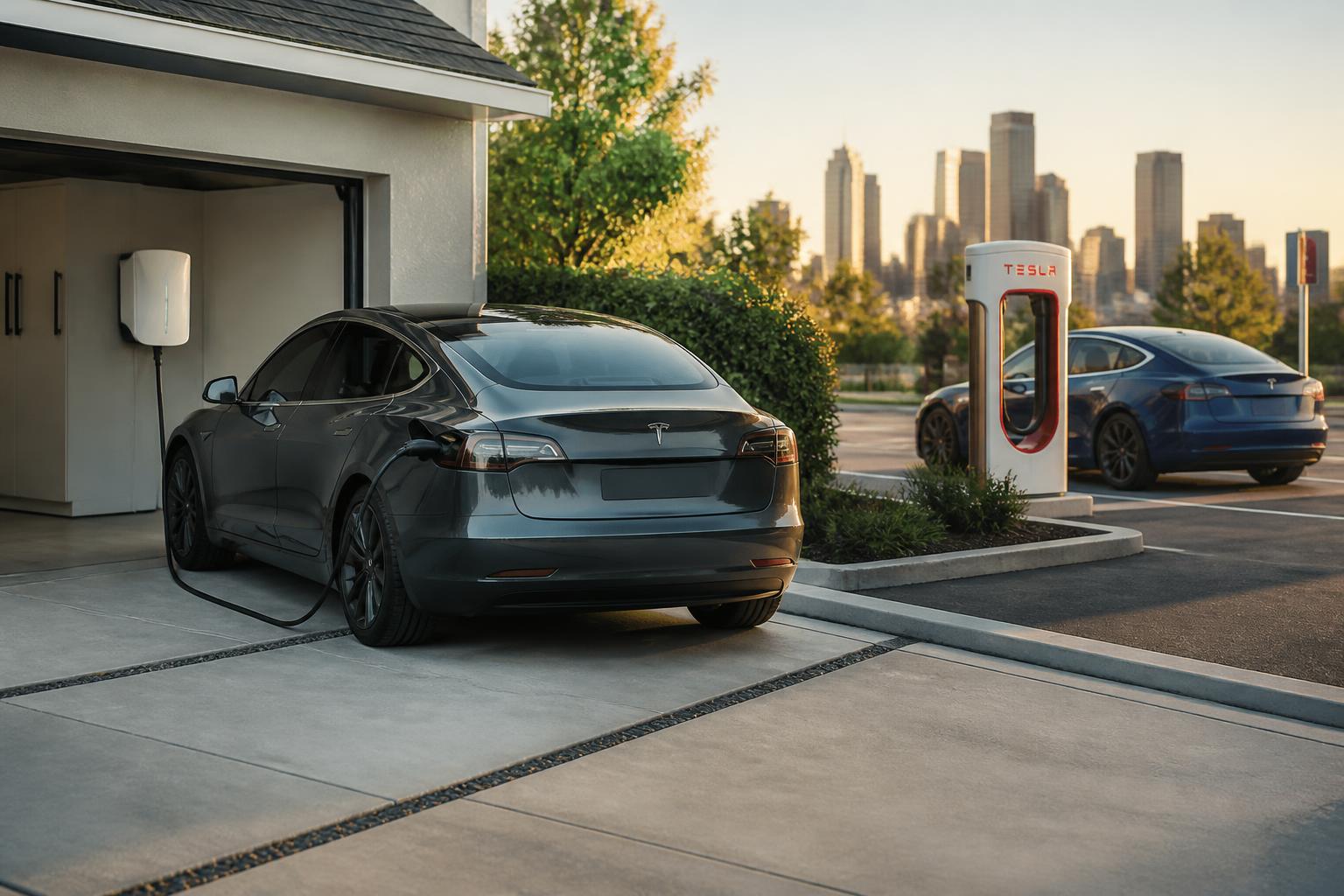
Home vs. Public Charging: What You’ll Actually Pay Per Mile
Your real-world cost per mile depends entirely on where you plug in and when you charge. The table below shows typical rates and monthly costs for a Tesla Model 3 with a 60 kWh battery and 1,500 miles driven per month.
| Charging Location | Typical Rate ($/kWh) | Cost per Full Charge | Cost per Mile | Monthly Cost (1,500 mi) |
|---|---|---|---|---|
| Home (U.S. avg) | $0.12 | $7.20 | $0.026 | $39 |
| Home (TOU off-peak) | $0.08 | $4.80 | $0.018 | $27 |
| Tesla Supercharger | $0.30 | $18.00 | $0.066 | $99 |
| EVgo / Electrify America | $0.35 | $21.00 | $0.077 | $116 |
What this means for your wallet: If you charge at home 80% of the time, your monthly fuel cost is about $39—on par with a compact gas car. But if you Supercharge more than 40% of the time, your cost per mile triples, and you lose the financial advantage of going electric. The single best move to hold that advantage is to enroll in a time‑of‑use (TOU) plan and charge overnight. Most utilities let you switch online in under 10 minutes.
But don’t rely on national averages alone. Your local rate changes everything. In Hawaii ($0.33/kWh) a full charge costs $20–25, matching Supercharger prices. In Washington ($0.10/kWh) it’s $6–7.50. And if you own an older Model S with a 100 kWh pack, even at the national average a full charge runs $12, not $7. Always use your own electricity rate and battery size to get a real number.
Model-by-model home charging costs at national average ($0.12/kWh):
| Model | Battery Size | Full Charge Cost | Cost per Mile (est.) |
|---|---|---|---|
| Model 3 RWD | 60 kWh | $7.20 | $0.026 |
| Model 3 Long Range | 75 kWh | $9.00 | $0.027 |
| Model Y Long Range | 75 kWh | $9.00 | $0.028 |
| Model S (current) | 100 kWh | $12.00 | $0.030 |
| Model X (current) | 100 kWh | $12.00 | $0.033 |
| Cybertruck (AWD) | 123 kWh | $14.76 | $0.035 |
These numbers assume 80% typical efficiency. Your real cost per mile will vary with driving style, weather, and terrain. In winter, expect 15–25% higher cost per mile due to reduced efficiency.
The $5,000–12,000 Failure Mode: When Your Charging System Kills the Battery
Most “how much is a Tesla” answers focus on sticker price and electricity cost. But owners often overlook a silent expense: replacing a high‑voltage battery because the charging system failed and wasn’t caught early.
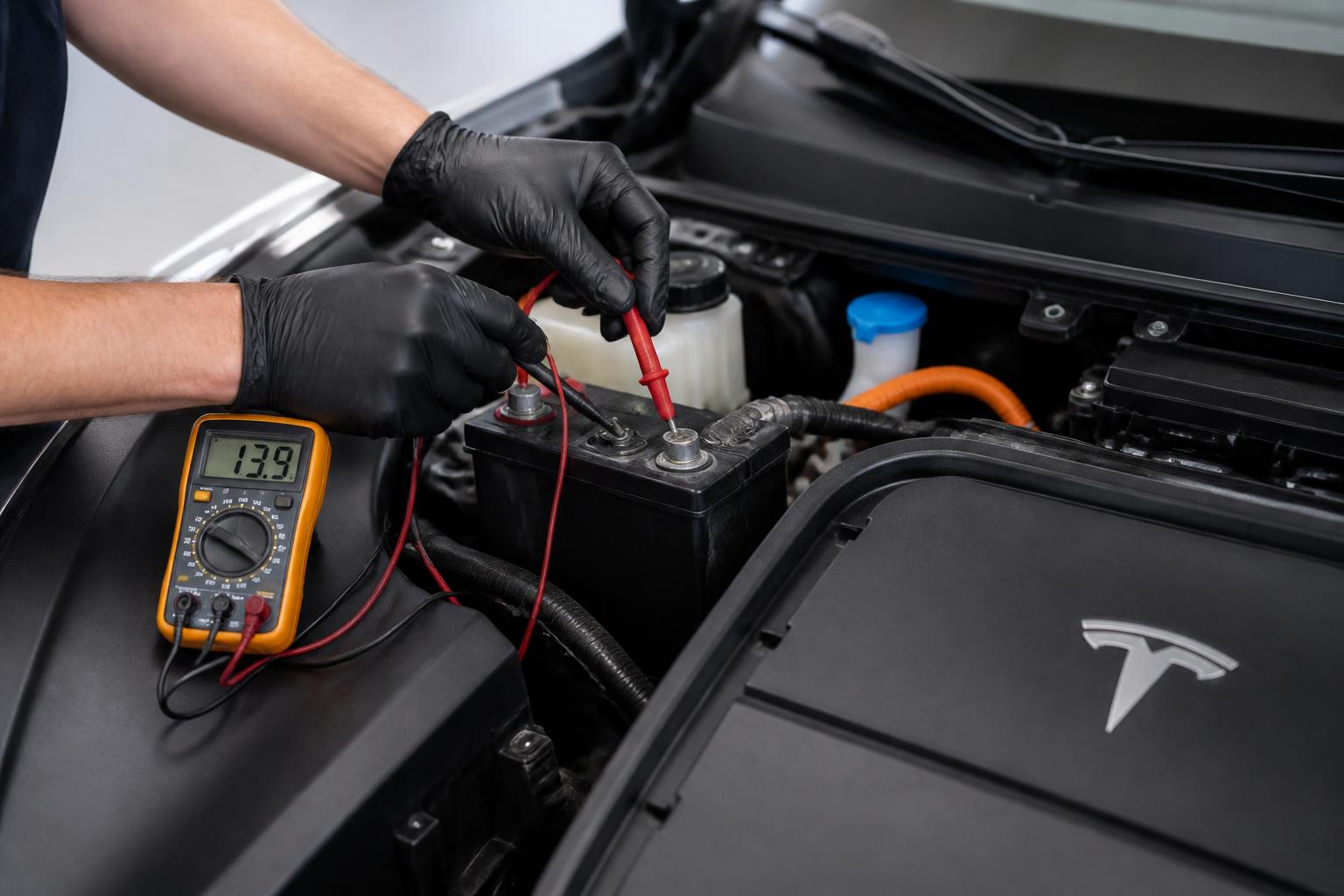
Here’s how it happens: A faulty onboard charger, a stuck contactor, or a corroded BMS connector can cause the battery management system to generate an “Unable to Rate” error. Many battery testers (like the Midtronics units Tesla techs use) show this message when the battery’s state of charge is too low (below ~12.0V) or right after a quick charge with surface charge present. If you ignore those warnings and just replace the battery without fixing the charging system, the new battery will die the same way.
Replacing a battery without addressing a faulty charging system is the most expensive mistake you can make as a Tesla owner. The charging system is the root cause—treating the symptom (a dead battery) without fixing the underlying fault guarantees repeat failure.
Detect It Early With This Checklist
- [ ] Do you see “Unable to Rate” repeatedly after a normal charge?
- [ ] Is your 12V auxiliary battery reading below 12.0V after a one‑hour rest?
- [ ] Does the car stop charging before the set limit more than once a week?
- [ ] Have you replaced the 12V battery in the last 12 months?
- [ ] Do charging sessions take significantly longer than they did when new (same temperature, same charger)?
If you answer Yes to two or more, do not assume the main battery is dead. Have the charging system diagnosed first. A proper diagnosis can save you $5,000–12,000 on a battery swap you don’t need.
Verification Step You Can Do Right Now
After a full charge, let the car sit for two hours. Then check the 12V battery voltage using the car’s diagnostics menu or a tool like Scan My Tesla. A healthy 12V battery should read above 12.4V. If it’s below 12.0V, the charging system is failing to maintain the auxiliary battery—fix that before any major repair.
Troubleshooting a Suspected Charging System Failure
If you’re seeing the warning signs above, work through this flow to identify the root cause before spending money.
Preparation
Park the car in a safe, well‑ventilated area. High‑voltage service requires proper PPE and training—do not attempt it yourself unless you’re qualified.
Initial Check
Measure the 12V auxiliary battery voltage. Anything below 12.4V after a rest points to a failing 12V battery or a charging system that can’t keep it charged.
Run a Midtronics‑Style Test
Use a compatible tester (or have a Tesla‑certified shop run one). Note the error code. “Unable to rate” paired with a voltage reading below 12.0V almost always means a failed 12V battery or a BMS communication fault.
Likely Causes
- Stuck contactor (won’t open/close properly)
- Corroded high‑voltage connector
- Failing onboard charger (the AC‑to‑DC converter)
- Bad ground in the charge port circuit
Escalation Signal
If the car enters “mountain mode” (a protection mode) and throws fault #96 (battery voltage below threshold), the system has locked the battery to prevent damage. I know from experience that if you drive the car outside of mountain mode, the car will again flag the system and lock the battery because #96 will fall below the threshold. This won’t resolve on its own—you need a professional diagnosis.
Success Check
After repair, the car should charge at its normal rate, reach the set limit without interruption, and the battery tester should return a “Good” or “Pass” result.
Don’t just swap the 12V battery and hope. If the deeper system isn’t fixed, the new 12V will also die prematurely, and the high‑voltage pack may continue to degrade.
How Adapters Fit Into Your Charging Setup
If you drive a non-Tesla EV and want to access the Supercharger network, you’ll need an adapter. The Lectron NACS to CCS Electric Vehicle Adapter with Interlock allows compatible non-Tesla EVs to connect to V3 and V4 Superchargers. It’s UL 2252 certified, which matters for warranty and safety reasons.
For the opposite scenario—charging a non-Tesla EV at a Tesla destination or wall connector—the Lectron Tesla to J1772 EV Charging Adapter handles up to 48A and works with J1772 vehicles. Keep in mind that adapters don’t fix charging system faults. If your car is throwing “Unable to Rate” errors, an adapter won’t help diagnose or solve the problem.
For home charging without a dedicated wall connector, a portable unit like the Lectron Level 1 / Level 2 EV Charger with interchangeable NEMA 5-15 and 14-50 plugs gives you flexibility. It supports up to 240V and 40A, which works for most overnight charging needs.
Will Solar Reduce Your Charging Cost Even Further?
If you own solar panels, charging a Tesla becomes the cheapest fuel on the road. At the national average solar offset rate of roughly $0.06/kWh (the effective cost after net metering and federal tax credits), a full charge on a Model 3 costs about $3.60. That’s $0.013 per mile—equivalent to a gas car getting 115 mpg.
The catch: most homes produce peak solar between 10 a.m. and 2 p.m., which doesn’t align with ideal charging times. If your utility offers net metering, you can export solar power during the day and pull from the grid at night at zero net cost. Without net metering, you’ll need a home battery to store solar energy for overnight charging, which adds $10,000–15,000 to your upfront cost.
Frequently Asked Questions
How much does it cost to replace a Tesla battery out of warranty?
Typical costs range from $5,000 to $12,000 for parts and labor, depending on the model and whether you use a Tesla Service Center or a third‑party shop. The 100 kWh packs in older Model S and Model X vehicles tend to be at the high end.
Does a faulty charger affect the main battery’s lifespan?
Yes. An intermittent or under‑performing charger can cause repeated deep discharges, incomplete charges, and thermal stress that accelerates capacity loss over time. A faulty onboard charger is one of the most common root causes of premature pack degradation.
Can I diagnose a charging problem myself with a home tool?
Partially. A Bluetooth OBD2 adapter paired with Scan My Tesla can show 12V battery voltage, cell voltages, and fault codes. But “Unable to Rate” errors and contactor faults require a Midtronics-level battery tester for reliable diagnosis. If you’re seeing consistent charging errors, a professional shop with the right equipment is worth the diagnostic fee.
How can I reduce charging cost further without solar?
Enroll in a time‑of‑use rate and charge between midnight and 6 a.m. Many utilities also offer an EV‑specific tariff with a lower per‑kWh rate for off‑peak charging. Some utilities provide rebates on Level 2 chargers or reduced rates for separate EV meters. Check your local utility website for specific programs.
Is Supercharging always more expensive than home charging?
Almost always. Tesla Superchargers average $0.30/kWh, which is 2.5× the national home rate. However, in areas with very high residential electricity rates (Hawaii, parts of California, New York), Supercharger rates can be comparable to or even slightly cheaper than peak home rates. Always compare your marginal home rate—not the average—against the local Supercharger price.

EV owner and automotive writer with 8+ years of hands-on experience across Tesla, Hyundai, Ford, and Nissan EV platforms. Former automotive technician. Certified in high-voltage system safety (Level 2). When not diagnosing charge port faults or testing range in cold weather, I’m helping other EV owners skip the dealer trip and fix problems themselves.