
Tire repair kit: Symptoms, Causes & Quick Fix
If your EV has a flat tire, the factory sealant kit or a quality plug kit is your first line of defense—most electric vehicles ship without a spare tire to save weight and preserve range. The catch: EV tires wear faster and are more prone to damage from road debris because of the extra 500–1,000 lbs of battery weight and instant torque. A repair kit can handle most common punctures, but knowing when not to use one is just as important.

Why Your EV Needs a Different Approach to Tire Repair
Electric vehicles come with three tire features that directly affect repair choices:
- Foam inserts – Many EV tires have a polyurethane foam ring bonded to the inner liner to quiet cabin noise. External plugging works fine with foam tires, but internal patching requires removing and replacing the foam—that’s a shop job. If you use a rope plug from the outside, the foam is irrelevant.
- Low rolling resistance (LRR) compound – Harder rubber reduces friction and extends range but also makes plugs harder to seat. A plug in an LRR tire may hold initially then develop a slow leak after a few days of heat cycles. Plan on a professional patch or replacement soon after a plug fix.
- Reinforced sidewalls (Load Range XL or HL) – Stiffer construction means driving even a short distance on a flat can damage the sidewall permanently. If you notice the tire is completely deflated, do not drive it at all—use the kit immediately or call roadside.
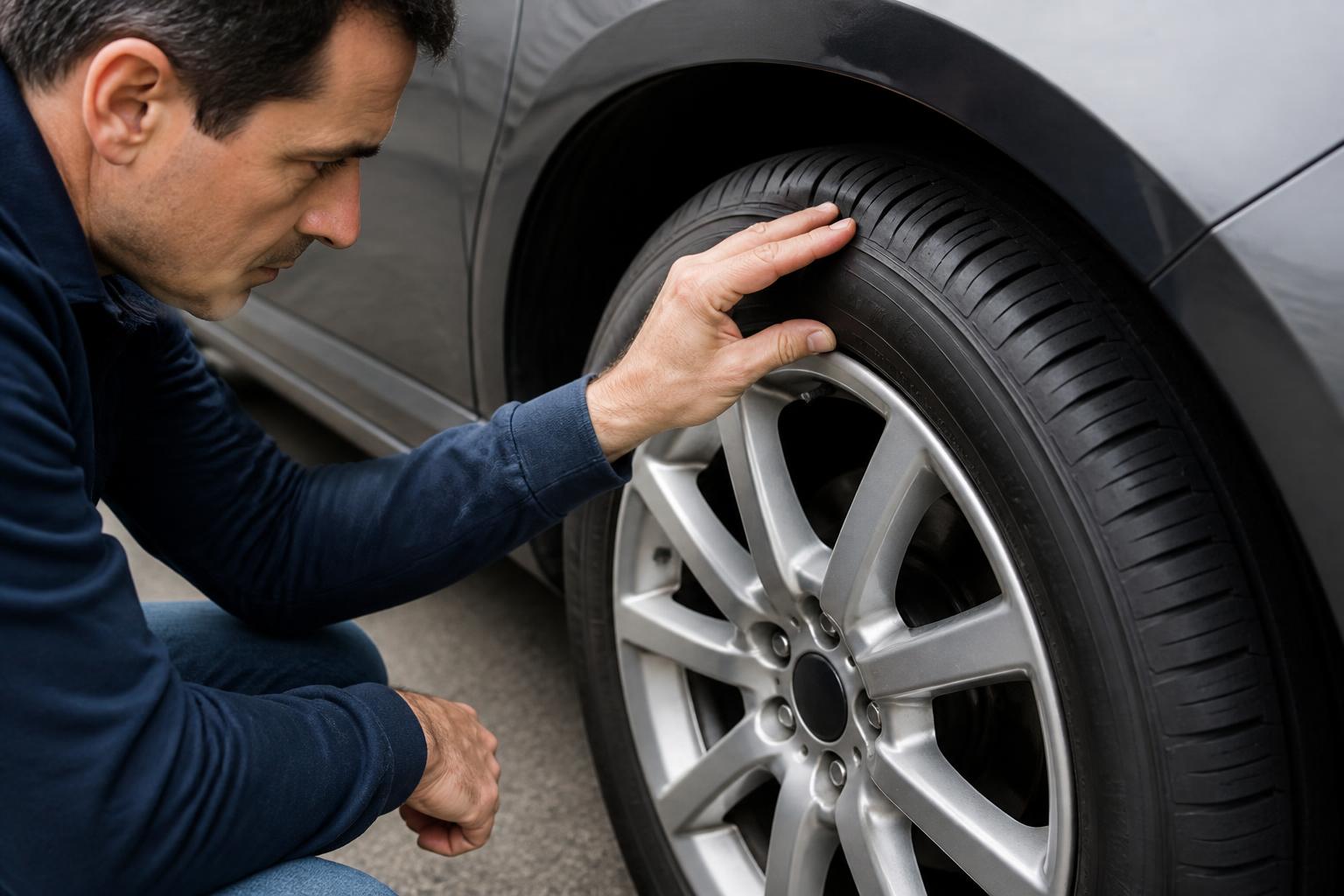
A key trade-off: The factory sealant kit in your trunk (typically a 12V compressor plus a bottle of liquid sealant) is a temporary fix. It works for tread punctures up to about ¼ inch (6 mm), but the sealant can gum up the TPMS sensor over time. Factory EV kits are formulated to be sensor-safe; aftermarket sealant may not be. If you plan to keep the car long-term, consider carrying a plug-and-patch kit instead—it avoids the sensor risk and gives a more reliable seal.
Early Checks Before You Break Out the Kit
Before you connect anything, stop and confirm the puncture is repairable:
- Is the puncture in the tread only? If it’s in the sidewall or shoulder, stop. No repair kit will fix that safely. Call for a tow.
- Is the object smaller than ¼ inch? Nails and small screws usually qualify. Larger holes will not seal reliably with sealant or a plug.
- Has the tire been driven while flat? If you drove more than a mile on a deflated tire, the sidewall is likely damaged. Even if the tire holds air after repair, it may fail later. Replace it.
- Is the tire pressure below 20 PSI? A compressor can inflate a low tire, but if it cannot reach the door-jamb spec within a few minutes, the leak is too large for a kit.
If any of these checks point to a non-repairable situation, skip the kit and go straight to roadside assistance or a tow.
How to Use a Tire Repair Kit on an EV
Most EV factory kits follow the same basic flow. The exact connections vary by brand, so check your owner’s manual before you need it.
Step 1: Safety and Positioning
Pull onto a level, stable surface away from traffic. Engage the parking brake. Turn on hazard lights. If you have a reflective vest or triangles, use them.
Step 2: Inspect and Decide
Locate the puncture object. If it is in the tread and smaller than ¼ inch, you can proceed.
- For sealant kits: Leave the object in place. Removing it before adding sealant lets air escape faster and may prevent the sealant from filling the hole properly.
- For plug kits: Remove the object with pliers, then ream the hole gently with the tool provided.
Step 3: Prepare the Compressor
Most EV compressors plug into the 12V outlet (check your center console or cargo area). If you are using sealant:
- Shake the bottle vigorously for 30 seconds.
- Connect the bottle to the compressor per the manual (some mount directly, others need a hose).
- Start the compressor and watch the gauge. Stop at the recommended PSI from the driver’s door jamb sticker.
Step 4: Distribute the Sealant
Drive the EV slowly (under 50 mph) for about 5 minutes. This spreads the sealant evenly inside the tire. If you used a plug instead of sealant, skip this step—just inflate and check for leaks.
Step 5: Recheck Pressure
After the short drive, check pressure again. If it dropped more than 5 PSI, the puncture is too large for the kit. Call a tow. If the pressure holds, you can drive up to the distance stated in your owner’s manual (typically 50–100 miles), but treat this as a temporary fix. Get the tire professionally inspected within 24 hours—many shops will patch from the inside for free or for a small fee if you caught it early.
When the Repair Kit Won’t Cut It
| Condition | What to Do |
|---|---|
| Puncture in sidewall or shoulder | Replace tire. No kit repairs sidewall damage. |
| Puncture larger than ¼ inch (6 mm) | Replace tire. Sealant and plugs will not hold. |
| Driven more than 1 mile on a flat tire | Sidewall damage likely; replace tire. |
| TPMS warning stays on after repair | Sensor may be clogged or damaged by sealant. Visit a shop. |
| Tire pressure lost while parked (no object visible) | Slow leak from a crack or valve stem issue—not repairable with a kit. |
Decision Checklist: Should You Use the Kit or Call a Tow?
- [ ] Puncture is in the tread area (not sidewall) → OK to proceed
- [ ] Object is smaller than a ¼ inch (6 mm) → OK to proceed
- [ ] Tire was not driven flat for more than 1 mile → OK to proceed
- [ ] You have a sealant kit or plug kit on hand → OK to proceed
- [ ] You are within 50 miles of a tire shop that can inspect → OK to proceed
- [ ] If any answer is NO → call for a tow instead
Keeping the Kit Reliable
- Check the sealant expiration date. Most bottles last 3–5 years. Expired sealant will not flow or seal properly. Replace it before you need it.
- Test the compressor annually. Plug it in and confirm it runs. A dead compressor means your entire kit is useless.
- Know where the kit lives. In most EVs, it is under the cargo floor or in a foam organizer. Find it now, not on the side of the road at night.
FAQ
Can I use a regular plug kit on EV tires with foam inserts?
Yes, external plugs work fine with foam tires. The foam is bonded to the liner and does not interfere with a plug from the outside. Internal patching requires foam removal, which a tire shop can handle.
Will sealant ruin my TPMS sensor?
Factory EV sealant kits are designed to be TPMS-safe. Aftermarket sealants vary—check the label for “TPMS safe” or use a plug kit instead to avoid the risk entirely.
How far can I drive after a repair?
Most manufacturers say 50–100 miles at reduced speed (under 50 mph). Get the tire professionally inspected within 24 hours. A plug or sealant fix is temporary, not permanent.
Do I need a spare tire too?
A repair kit handles most tread punctures. For sidewall damage or large holes, a compact spare is better. Aftermarket compact spares exist for many EVs like the Tesla Model Y and Ford Mustang Mach-E—verify fitment with the seller before buying.
What if my EV has run-flat tires?
Check your owner’s manual. Many run-flat tires cannot be repaired after being driven on, even if they appear intact. If you have run-flats, confirm the policy before attempting a DIY repair.
No kit is a substitute for proper tire maintenance. Keep your tires inflated to the door-jamb spec, rotate them every 5,000–7,500 miles to manage the faster drive-axle wear, and replace them when tread depth reaches 4/32 inch for safe wet-weather driving in a heavy EV. A repair kit is a useful tool, but knowing its limits is what keeps you from making a bad situation worse.

EV owner and automotive writer with 8+ years of hands-on experience across Tesla, Hyundai, Ford, and Nissan EV platforms. Former automotive technician. Certified in high-voltage system safety (Level 2). When not diagnosing charge port faults or testing range in cold weather, I’m helping other EV owners skip the dealer trip and fix problems themselves.