
Gfci outlet repair: Symptoms, Causes & Quick Fix
If your GFCI outlet trips every time you plug in your EV charger, the most likely culprit is a worn-out outlet struggling with the continuous high load of Level 1 charging. Many standard GFCI outlets are not built to sustain 12 amps for hours on end, and they can develop internal leakage that mimics a ground fault. Start by feeling the outlet after 30 minutes of charging—if it’s noticeably warm, you’ve found the failure mode early. Replace it with a heavy-duty, spec-grade GFCI rated for continuous use.
Important note: This guide applies specifically to 120V Level 1 EV charging using a standard 5-15 or 5-20 plug. If you are using a 240V Level 2 charger through a dedicated outlet, the GFCI protection is typically built into the breaker, not the receptacle. For Level 1 charging, the outlet itself is the most failure-prone component.
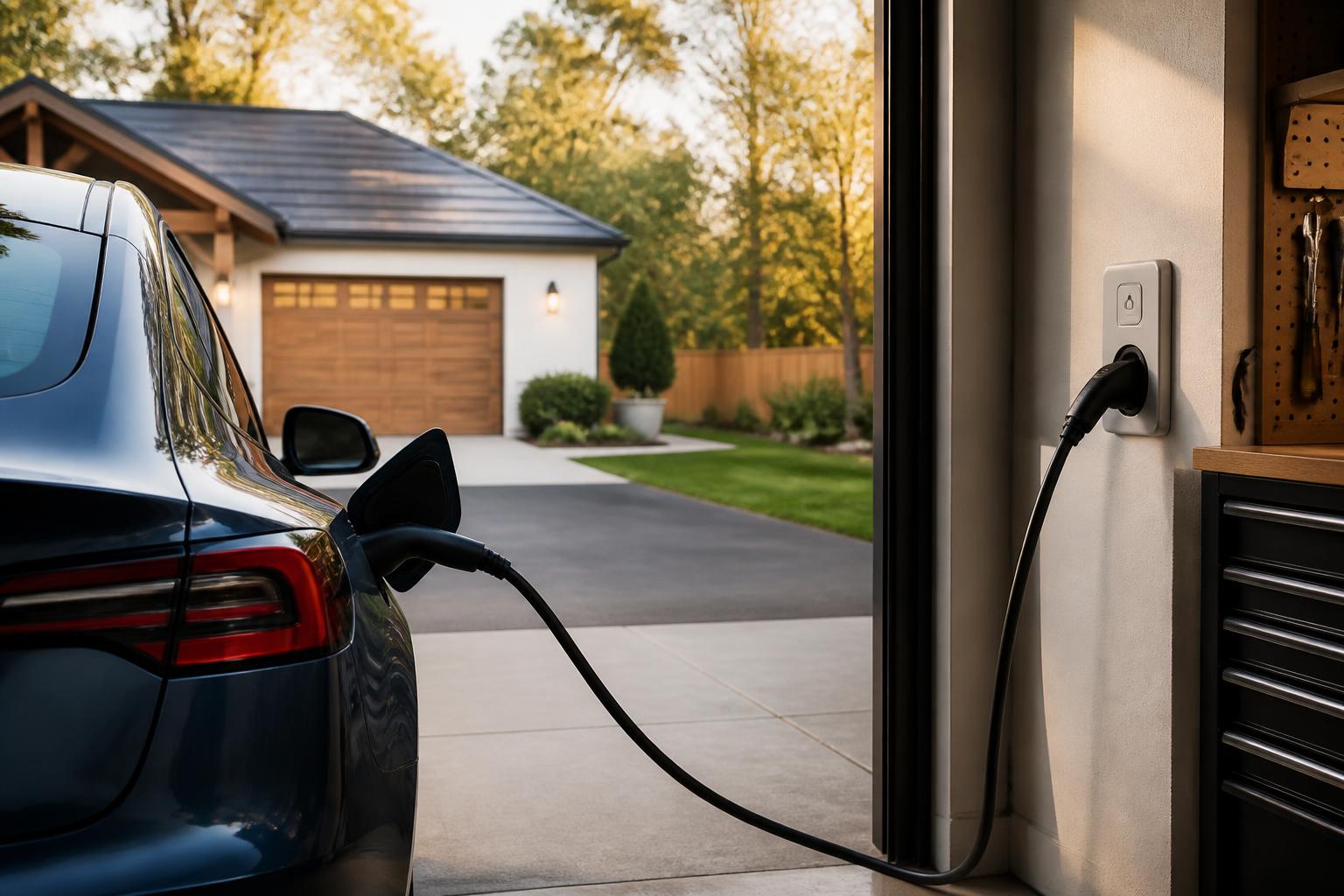
Why Your GFCI Keeps Tripping During EV Charging
GFCI outlets are designed to trip when they detect a ground fault—current leaking to ground as low as 5 mA. But EV chargers, especially Level 1 units pulling 12 amps continuously, can cause nuisance tripping for several reasons:
- Heat buildup: Continuous high current heats the internal contacts and sensor. Over time, the GFCI’s electronics can drift, causing false trips. A spec-grade outlet uses heavier contacts and better heat dissipation, reducing this risk.
- Moisture or humidity: A damp garage or outdoor outlet allows tiny leakage currents from the charger plug or the receptacle itself. Even condensation inside the outlet face can trigger a trip.
- Aged or cheap GFCI: Builder-grade outlets (often $10–15) degrade faster under sustained load. Their internal components may drift from the 5 mA threshold, tripping at 3–4 mA. A worn GFCI may also fail to reset properly.
- Charger side leakage: Some EVSE units have a small amount of leakage current due to internal circuitry (filters, capacitors). If that leakage exceeds 5 mA, the GFCI trips. This is more common with older or off-brand chargers.
- Circuit overload: If the same circuit powers other loads (lights, a freezer), the total current can push near the breaker’s rating, but the GFCI may trip before the breaker does due to voltage drop and increased heat at the outlet contacts.
The key early detection signal is a warm outlet face. If the outlet feels hot after 20–30 minutes of charging, the internal thermal stress is likely causing the GFCI to become oversensitive. Replace it before the problem worsens—continued overheating can lead to melted wiring or fire risk.
Quick Checks Before You Call an Electrician
Before digging into outlet replacement, rule out the simplest causes with these five checks:
1. Test with a known load. Plug in a hair dryer on high or a 1500W space heater for 10 minutes. If the GFCI trips, the outlet is likely failing under sustained load. If it doesn’t trip, the problem may be charger-specific.
2. Inspect the outlet. Look for discoloration, melting, or burn marks around the plug face. Any sign of heat damage means immediate replacement. Also check the plug prongs on your charger—if they show scorching, the outlet contacts are likely worn.
3. Check the breaker. Ensure the circuit breaker is at least 20 amps. A 15-amp breaker with a 12-amp charger leaves little headroom; even if the breaker doesn’t trip, the GFCI outlet may overheat. If you have a 15-amp breaker, you cannot upgrade the outlet without upgrading the wiring—call an electrician.
4. Check for moisture. If the outlet is outdoors or in a damp garage, use a weatherproof-in-use cover (the dome style) that seals while the charger is plugged in. Try charging after the area has been dry for 24 hours. A simple plastic cover is not enough; the outlet needs a sealed enclosure.
5. Try a different circuit. If you have a non-GFCI garage outlet (e.g., for a freezer or work light), plug the charger in briefly. If it charges without tripping, the GFCI outlet is the issue. If it still trips on the non-GFCI circuit, the charger itself likely has a ground fault—contact the manufacturer.
Step-by-Step GFCI Outlet Troubleshooting for EV Charging
Step 1: Reset and test with a lamp
Press the TEST button, then the RESET button (you should hear a click). Plug in a simple incandescent lamp—avoid LED or CFL bulbs with electronic drivers, as they can cause false trips. If the lamp stays on without flickering, the GFCI is functioning. If the lamp causes a trip, the outlet is likely defective.
Step 2: Measure voltage and leakage under load
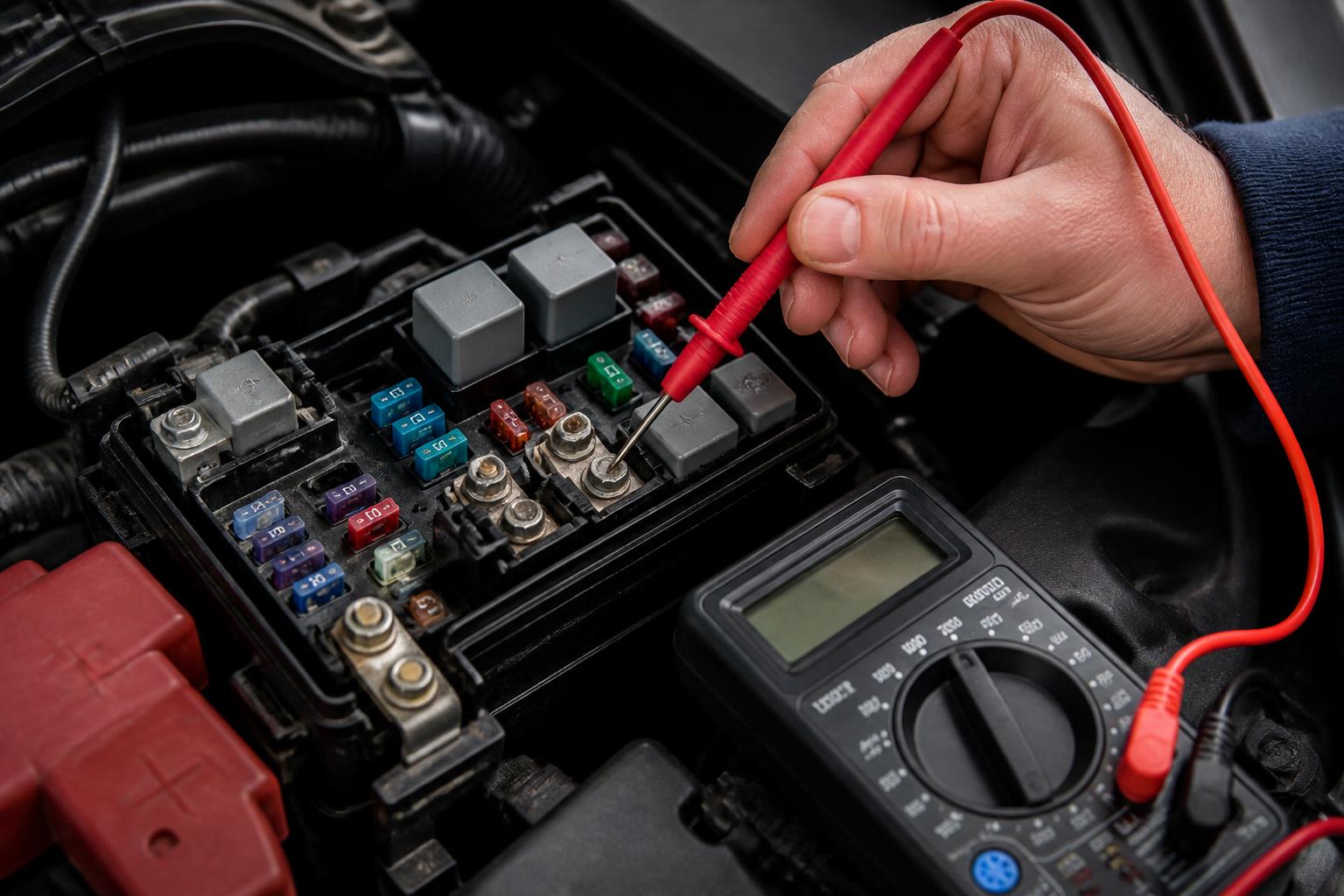
With a multimeter set to AC voltage, check between hot (narrow slot) and neutral (wide slot) – should read 120V ± 5V. Then check between hot and ground (the round hole) – should also be 120V. A reading below 110V under load suggests a poor connection or undersized wiring.
Concrete verification: After 15 minutes of charging, measure voltage again at the same outlet. If it drops more than 8V from the no-load reading, the outlet or wiring has excessive resistance. This indicates the outlet contacts are degrading and should be replaced.
Only proceed if you are comfortable using a multimeter safely. If unsure, skip this step.
Step 3: Isolate the charger
Plug the EV charger into a different GFCI outlet (e.g., in the kitchen or a garage outlet on a separate circuit). Standard kitchen GFCI outlets usually share the same branch—test on a circuit that you know serves a different breaker.
- If it doesn’t trip, your original outlet is failing.
- If it trips on the new GFCI too, the charger is likely leaking more than 5 mA. Contact the EVSE manufacturer for warranty service. Do not attempt to repair the charger plug or internal electronics.
Step 4: Replace the GFCI outlet
If the outlet is the problem, buy a spec-grade GFCI receptacle rated for continuous load. Look for markings like “Hospital Grade” or “Spec Grade” on the package. These outlets have heavier internal contacts, better heat dissipation, and are designed for sustained high current.
Realistic trade-off: Standard builder-grade GFCIs cost about $10–15, while spec-grade units run $20–35. The cheaper ones often fail within months under continuous EV charging—the contacts wear out and the internal sensor drifts. A spec-grade outlet will last years. Turn off the breaker at the panel, remove the old outlet (note wiring: LINE terminals from the breaker, LOAD terminals if feeding downstream outlets), and install the new one. Match wires to screw colors: brass screw for hot (black), silver for neutral (white), green for ground. Test with the TEST and RESET buttons before plugging in the charger.
Step 5: Verify charging success
Charge the EV for 30 minutes. The outlet should remain cool to the touch—if it feels warm at all, check for loose wiring or consider upgrading to a 20-amp circuit. The GFCI should not trip. If it still trips after replacement, the issue may be the breaker itself (a bad GFCI breaker) or the wiring in the wall—call an electrician.
Decision Aid: Is It the Outlet or the Charger?
Use this quick pass/fail guide to decide your next move. For each check, mark whether the answer points to a bad outlet or a healthy one.
| Check | Yes (outlet likely bad) | No (outlet likely OK) |
|---|---|---|
| Outlet feels warm after 30 min of charging? | Yes ➔ Replace outlet | No ➔ Look for other causes |
| GFCI trips immediately when plugging in charger? | Yes ➔ Possible outlet or charger – proceed to isolation test | No ➔ Outlet may be fine |
| Charger works on a non-GFCI circuit? | Yes ➔ GFCI outlet is the problem | No ➔ Charger likely has internal leakage |
| Outlet shows discoloration or burn marks? | Yes ➔ Replace outlet immediately | No ➔ Outlet may still be worn |
| Does the outlet trip with a high-wattage hair dryer after 10 minutes? | Yes ➔ Outlet is failing under sustained load | No ➔ Outlet likely OK, check charger |
If three or more checks point to the outlet being bad, replace it with a spec-grade GFCI. If the charger still trips on the new outlet, have the EVSE inspected or replaced.
What This Means for Your Next Step
If you confirmed the outlet is the cause, your practical next choice is simple: replace the GFCI with a spec-grade unit rated for continuous load. Do not try a second builder-grade outlet—it will fail again. If the charger trips even on a new, heavy-duty GFCI, the EVSE itself likely has a ground fault. Contact the manufacturer for warranty service; do not try to repair the charger housing or plug yourself. For Level 1 charging, a quality GFCI replacement is a one-time fix that gets you back to reliable overnight charging without the nuisance trips.

EV owner and automotive writer with 8+ years of hands-on experience across Tesla, Hyundai, Ford, and Nissan EV platforms. Former automotive technician. Certified in high-voltage system safety (Level 2). When not diagnosing charge port faults or testing range in cold weather, I’m helping other EV owners skip the dealer trip and fix problems themselves.