Auto extended car warranty: Battery Warranty Explained
A factory EV battery warranty typically covers 8 years or 100,000 miles against defects and capacity loss below 70% of original capacity. An auto extended car warranty—either from the manufacturer or a third‑party provider—may continue that protection, but the terms, thresholds, and exclusions are rarely identical. If you’re buying an extended warranty for an electric vehicle, the battery coverage is the make‑or‑break detail.
What an extended warranty really covers for EV batteries
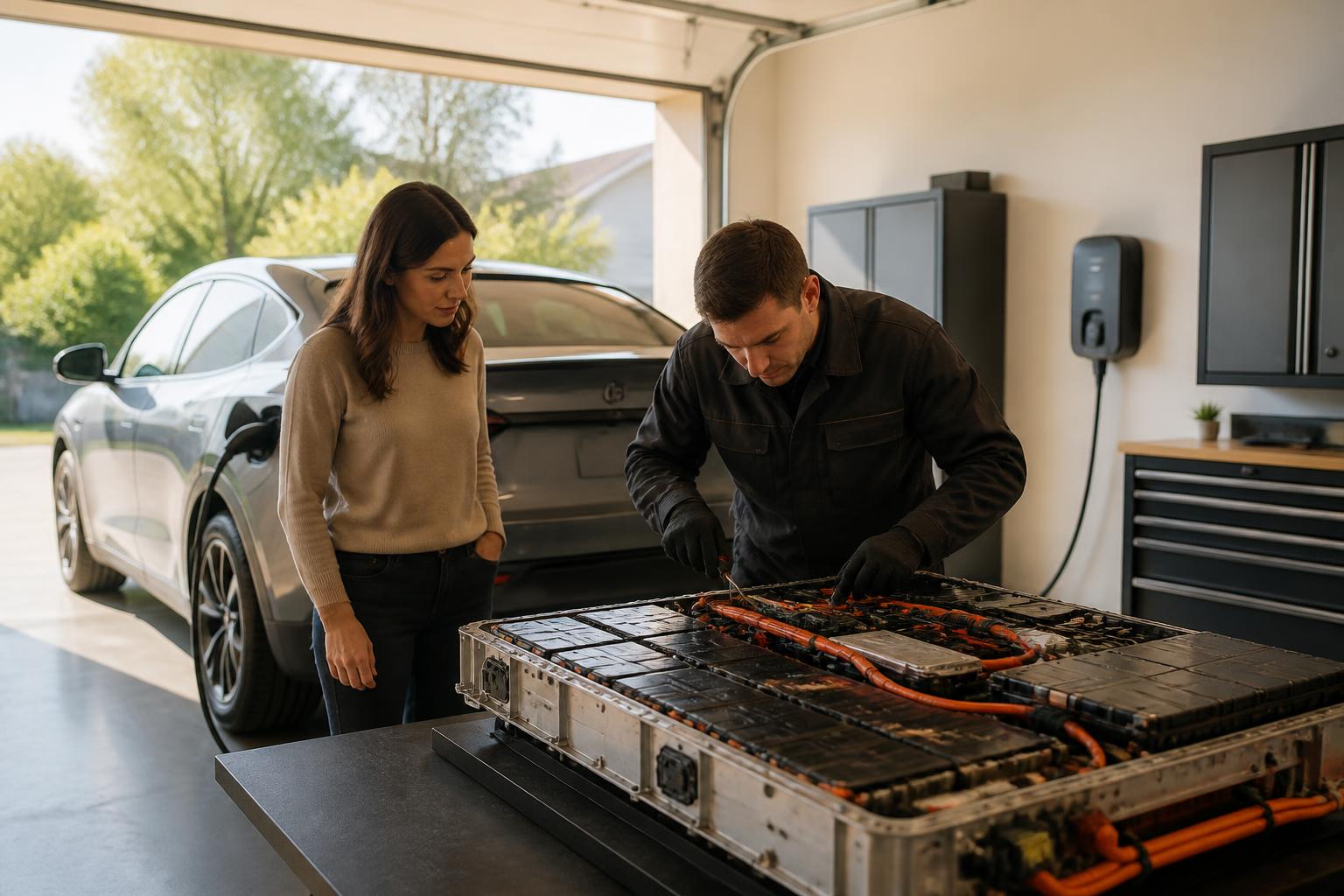
Most third‑party extended warranties treat the high‑voltage battery as a covered component, but the coverage is often limited to sudden electrical failure (e.g., a cell short, BMS fault, or internal open circuit). Gradual capacity loss—the kind that leaves you with 60% of original range after six years—is routinely excluded unless the contract explicitly says otherwise.
Manufacturer‑sponsored extended warranties (like those sold by Tesla, Ford, or GM) tend to mirror the factory degradation language, meaning they will cover a battery that falls below the same capacity threshold (commonly 70%) during the extension period. Third‑party plans, on the other hand, typically do not set a hard percentage trigger. They will replace a battery only when it fails to hold a charge and the diagnostic tool reports an internal short or a cell voltage deviation outside the manufacturer’s spec.
The decision criterion that changes the recommendation
If the extended warranty clearly states it covers gradual capacity loss below a stated percentage (e.g., 70% within the warranty term), it is worth serious consideration for anyone planning to keep the car beyond 8 years. If it only covers sudden failure, it is rarely worth the premium for an EV driver who maintains the battery properly and charges within the recommended SOC window.

Practical implication for your next choice: If you’re between a manufacturer‑backed extended warranty (higher premium, full degradation protection) and a third‑party plan (lower premium, sudden‑failure only), run the numbers. An average EV battery replacement costs $5,000–$15,000. A manufacturer extended warranty that covers gradual loss costs roughly $2,000–$4,000 for 5–6 extra years. If you plan to keep the car past 8 years and drive 15,000+ miles a year, the manufacturer plan wins. If you lease or sell before 6 years, skip the extended warranty altogether and pocket the premium.
What’s excluded (and what trips up owners)
Even the most generous extended battery warranty will have a standard list of exclusions. Read the fine print for these common gap‑makers:
- Physical damage – crash damage, road debris puncture, or impact to the battery pack.
- Aftermarket modifications – non‑factory battery management software, aftermarket thermal systems, or performance tunes.
- Missed software updates – some manufacturers require that the vehicle receives OTA updates on schedule; skipping them can void a degradation claim if the update was meant to correct a battery‑health issue.
- Improper charging habits – frequent DC fast‑charging in extreme heat or consistently charging to 100% while parked for days may be cited as misuse.
- Second‑owner conditions – many third‑party warranties do not transfer, or they reduce the coverage level for subsequent owners (e.g., from “inclusionary” to “stated component” only). Verify transferability and any fee before buying a used EV.
Realistic trade‑off: manufacturer vs. third‑party
The biggest mismatch comes when an owner buys a third‑party extended warranty expecting the same coverage as the factory bumper‑to‑bumper. Third‑party plans often exclude auxiliary battery failures (the 12V lithium‑ion or lead‑acid battery that runs the contactors) and BMS software updates that are required for degradation‑based claims. If your battery loses capacity but no internal short is detected, the third‑party plan won’t pay—even if you’re down to 50% range. That’s the scenario where you’re stuck with the full replacement cost. Meanwhile, a manufacturer extended warranty would cover that same gradual loss, but costs $1,000–$2,000 more up front.
How to start a battery warranty claim (operator flow)
If you suspect your EV battery has degraded beyond the covered threshold or has a defect, follow this procedure to avoid wasting time or money.
1. Confirm your warranty status
- Locate the original warranty document or your extended contract.
- Note the effective date, mileage, and transfer history.
- Check whether the plan covers gradual capacity loss or only sudden failure. If only sudden failure, you need a diagnostic result showing a specific electrical fault—not a range complaint.
2. Charge to a consistent state of charge (SOC)
- Perform a full balance charge (charge to 100% and let the BMS equalize cells, typically 1–2 hours after reaching 100%).
- Drive immediately to the service center; do not let the battery sit at high SOC for extended periods (that triggers surface charge errors and a “Unable to rate” reading from the diagnostic tester).
3. Visit an authorized service center
- Most extended warranty claims require an in‑person diagnostic at a manufacturer‑affiliated dealer or a certified EV shop.
- Expect a diagnostic fee ($100–$200) up front. The warranty usually reimburses that fee only if the claim is approved.
4. What the technician checks
- The service tool will run a capacity test and a cell‑voltage deviation scan.
- If the battery voltage is below ~12.0V (for a 12‑volt auxiliary) or if the pack has been recently fast‑charged, the tester may show “Low Voltage” or “Unable to rate.” That is not a denial—it means the battery needs a full charge/discharge cycle before a valid reading.
- A pass/fail result against the warranty threshold takes about 30–60 minutes.
5. Documentation you’ll need
- Proof of extended warranty purchase (policy number, coverage dates).
- Vehicle registration and VIN.
- Service records showing routine maintenance (coolant flushes, BMS updates, etc.). Missing records give the adjuster an easy reason to deny.
6. Escalation signals
- If the adjuster denies the claim based on “normal wear” but your contract uses a percentage threshold, ask for the actual test data (initial capacity reading vs. original spec). A refusal to provide the data is a red flag.
- If the battery replaced under warranty fails again within a short period (months), the likely cause is a faulty charging system that was not addressed during the original repair. Replacing a battery without fixing the charging system leads to repeat failures. Insist the service center test the on‑board charger and DC‑DC converter before closing the claim.
Verification step you can do at home
Before heading to the shop, check your vehicle’s battery health screen. Most modern EVs (Tesla, Hyundai, Kia, Ford) show a Battery Degradation Percentage or SOH (State of Health) in the service menu or a third‑party app (e.g., Teslamate, CarScanner). If that number is below 70% and you can capture a screenshot as evidence, it strengthens your claim—especially for third‑party warranties that require proof of gradual loss.
Expert tips for buying an auto extended warranty on an EV
1. Verify the degradation threshold in your contract
Actionable step: Ask the provider for the exact percentage (e.g., “Will you replace the battery if capacity drops to 65% of original?”).
Common mistake: Assuming “covers high‑voltage battery” means the same as the factory degradation threshold. Most third‑party plans do not use a fixed percentage.
2. Check transferability before you sell
Actionable step: If you plan to sell the car within the warranty term, confirm that the extended warranty transfers to the new owner (and whether there is a transfer fee).
Common mistake: Buying a non‑transferable plan and then losing any resale value boost when you trade the vehicle.
3. Keep a log of DC fast‑charging sessions
Actionable step: Use the vehicle’s trip logs or an app to record every DC fast‑charge. Some warranty exclusions cite “excessive rapid charging.”
Common mistake: Assuming the warranty won’t check. Adjusters can pull the car’s charge‑history data during a claim, and a pattern of high‑speed charging in hot climates can be used to deny a degradation claim.
Key facts and takeaways
- Factory battery warranty: 8 years / 100k miles (varies by model; check your manual). Covers defects and capacity loss below ~70%.
- Third‑party extended warranty: Typically covers sudden electrical failure only. Gradual capacity loss is excluded unless the contract specifies a percentage threshold.
- Second‑owner coverage: Many plans reduce coverage or require a transfer fee. Confirm before buying a used EV.
- Diagnostic fee: Plan to pay $100–$200 upfront; refundable only if the claim is approved.
- Pre‑claim charge: Charge to 100% and drive immediately to the service center to avoid a “Unable to rate” or “Low Voltage” reading.
Related questions
Does an extended warranty cover a battery that only gets 50 miles of range?
Only if the contract uses a specific capacity‑loss percentage and the diagnostic test shows the battery has fallen below that threshold. Otherwise, a range complaint alone is not enough—the BMS must report a fault or the capacity test must confirm the loss.
Can I buy an extended warranty after the factory battery warranty expires?
Most third‑party providers require that the vehicle is still under the factory warranty or has fewer than a certain number of miles (e.g., 36,000) at the time of purchase. After expiration, options are limited and expensive.
Is an extended warranty worth it for an EV?
It depends on the coverage. If the plan explicitly covers gradual capacity loss (rare), it can be valuable for long‑term owners. If it covers only sudden failure, the premium is usually better spent on a dedicated battery health check every two years.

EV owner and automotive writer with 8+ years of hands-on experience across Tesla, Hyundai, Ford, and Nissan EV platforms. Former automotive technician. Certified in high-voltage system safety (Level 2). When not diagnosing charge port faults or testing range in cold weather, I’m helping other EV owners skip the dealer trip and fix problems themselves.